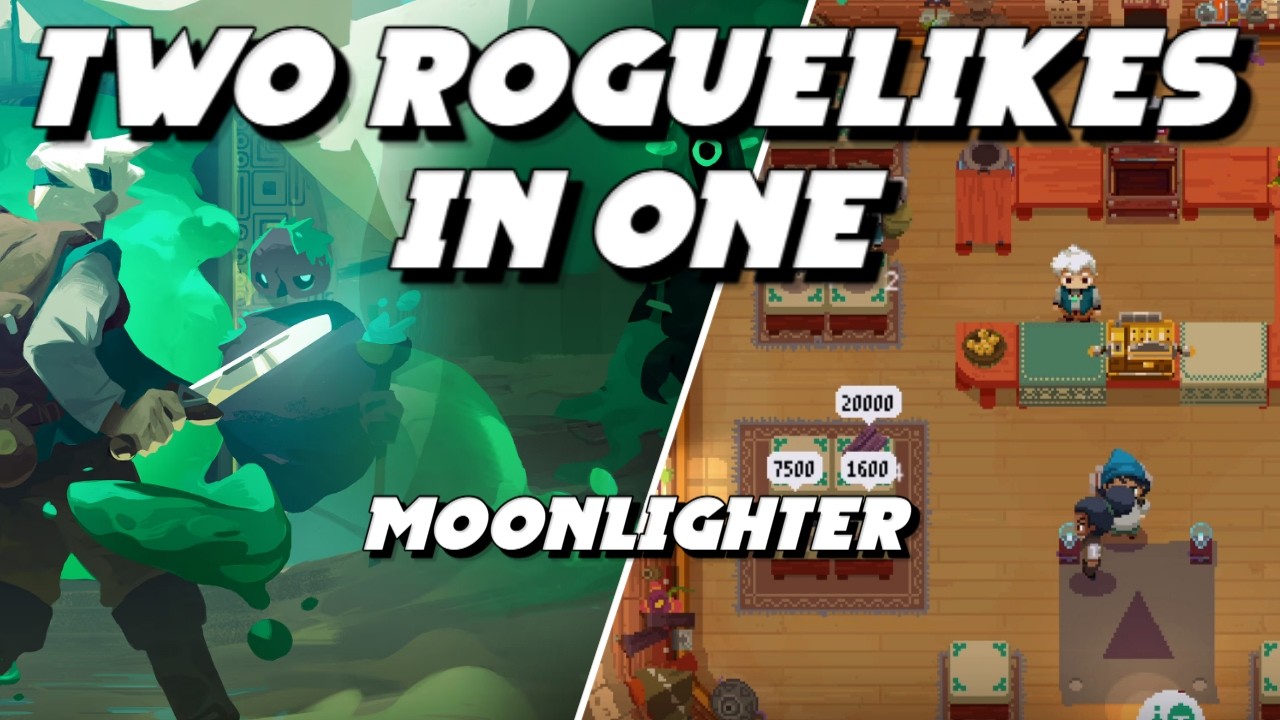
There is something magical about Moonlighter. It's not just the cozy and mysterious setting - it's the combination. It's basically two games in one, and neither half is great on its own. But together, they create something genuinely unique. With the second installment set to release later this year, now is a good time to revisit what made the original work.
The hybrid gamble
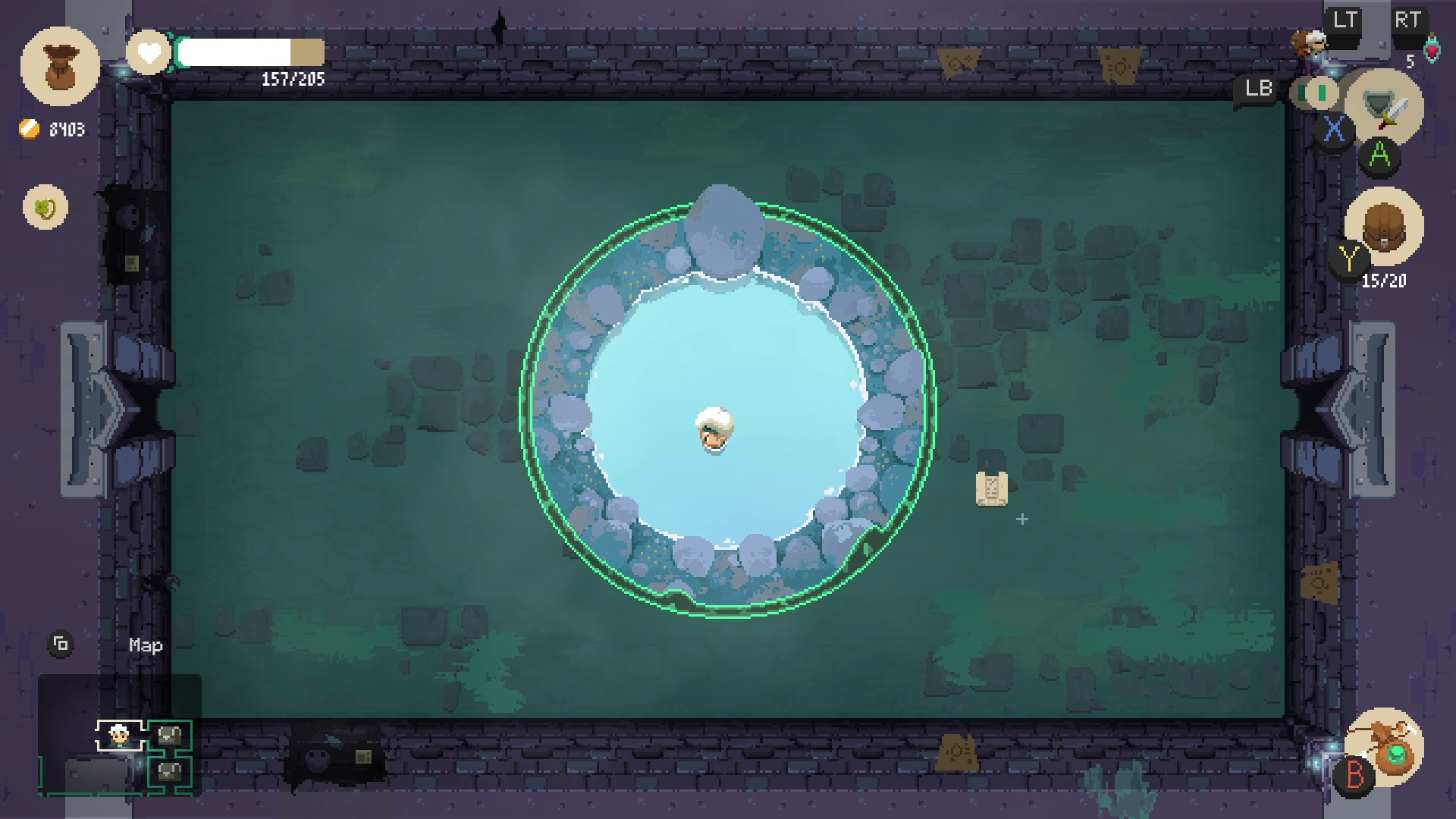
Moonlighter has a pitch that sounds like it was written by someone who couldn't decide what game to make. You're Will, a shopkeeper in a small fantasy town who secretly sneaks into mysterious dungeons at night. During the day you run your shop - setting prices, managing inventory, watching customers react to what you're selling. At night you fight monsters, collect loot, and try to survive long enough to bring something valuable home.
It's a shop management game. It's also a Zelda-like dungeon crawler. Let's find out if that actually works.
The art of the deal
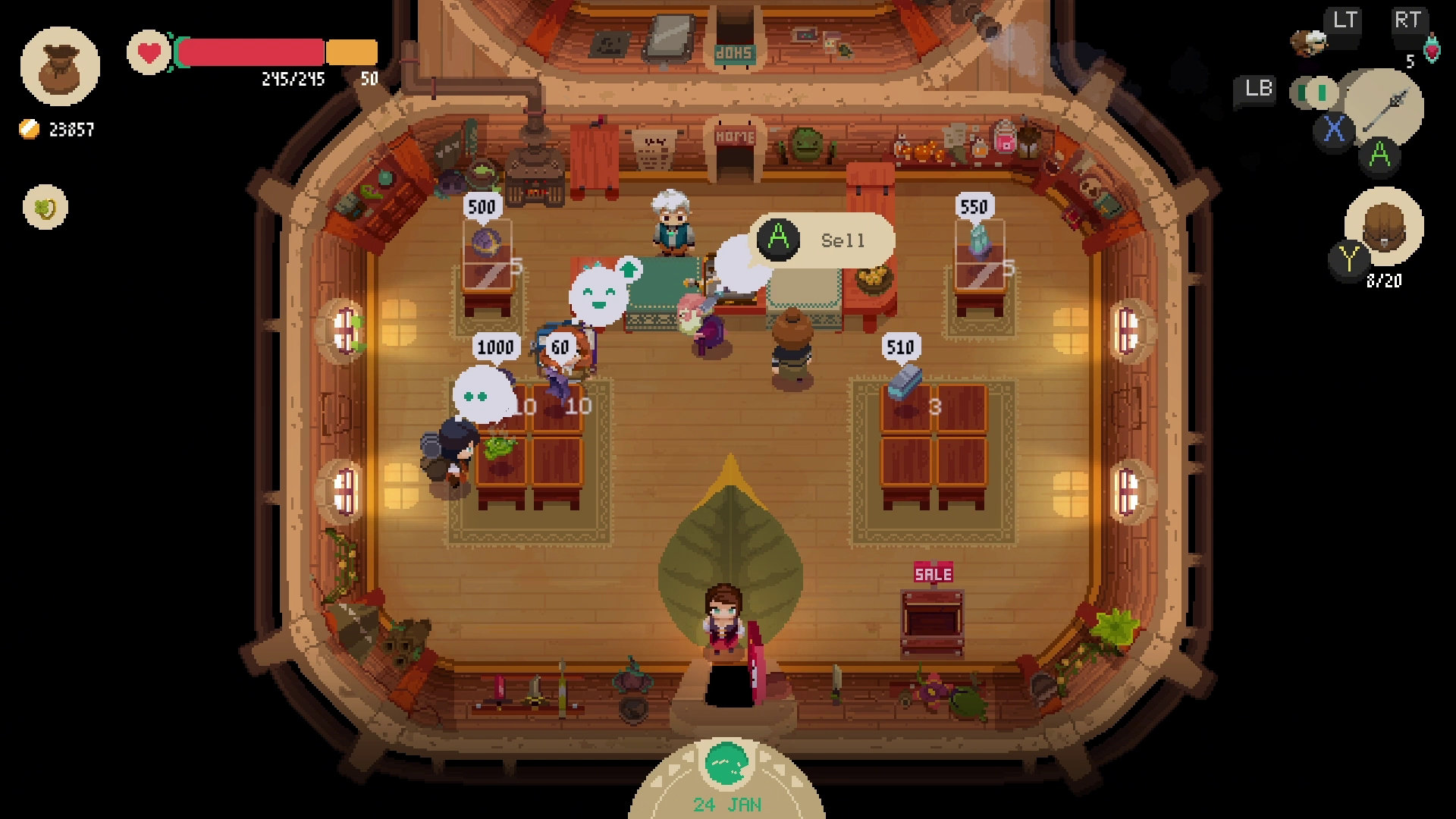
The shop is what makes Moonlighter distinct from every other roguelike-adjacent game, and it's worth spending real time here before we get to the dungeons.
Every morning you open your doors. You arrange items on the shelves, set prices, and watch. Customers walk in, examine what's on offer, and react visibly to your pricing. A thought bubble with a happy face means the price is too low - you're leaving money on the table. A shocked face means too high - they put it back and leave. You learn what things are worth by watching people's faces.
It's a simple mechanic that turns out to be quietly compelling. The first time you bring back a new material from a dungeon, you have no idea what it's worth. You guess. You watch. You adjust. Over time you build an intuition for the economy of your little town - tracking what sells quickly, what lingers on the shelves, which product mixes maximize your daily returns.
Every dungeon run is implicitly in service of the shop, and every shop day is preparation for the next dungeon run.
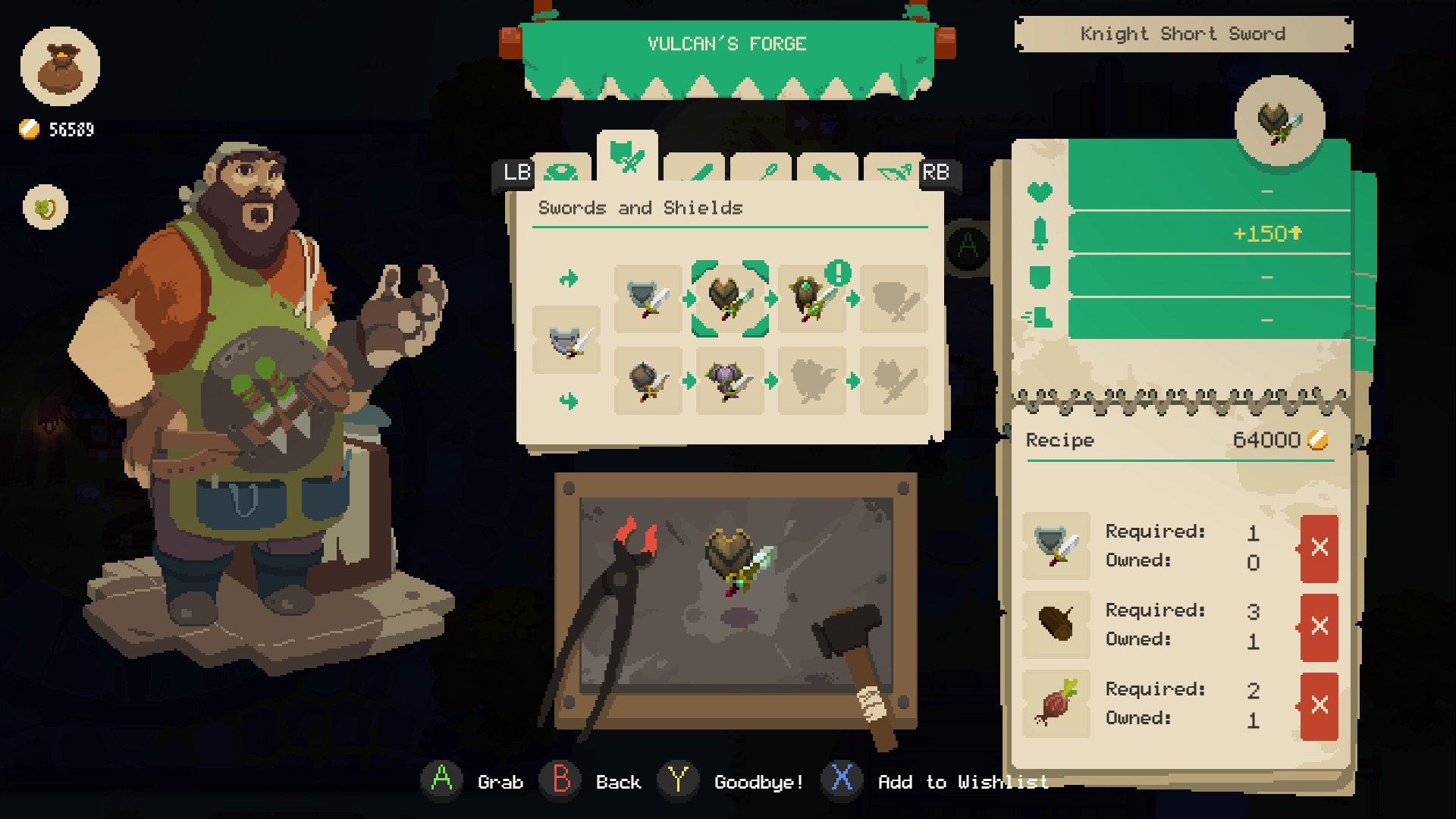
The money you earn buys upgrades for the shop, for the town, and eventually for Will's equipment - which means the two halves are economically linked in a way that makes each feel purposeful. That link is the beating heart of the game.
Moonlight and monsters
The dungeon side of Moonlighter is a competent Zelda-like roguelike. Procedurally generated rooms, real-time combat, enemy patterns to learn, bosses at the end of each dungeon tier. Will attacks with melee weapons or a bow, using dodge rolls to evade incoming hits while carefully managing his health.
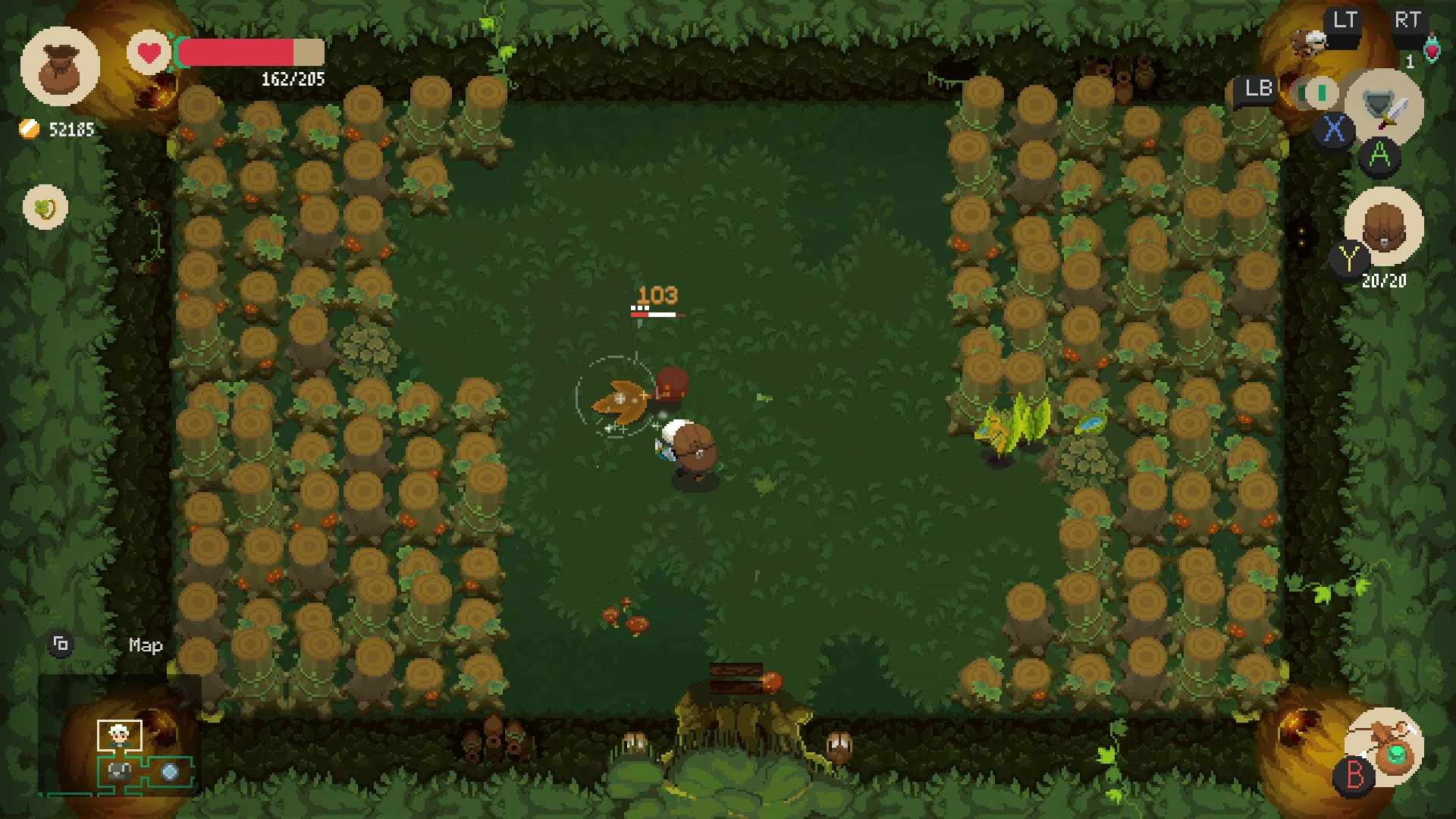
The combat is functional rather than exceptional. It doesn't have the depth of a dedicated action roguelike - the enemy variety is decent without being spectacular, and the weapon selection, while covering several distinct playstyles, doesn't offer the build complexity of something like Dead Cells or Hades.
What it does have is excellent pacing at the room level. The dungeons are intentionally short. You're not descending for hours - you're making quick runs, grabbing what you can, and getting out.
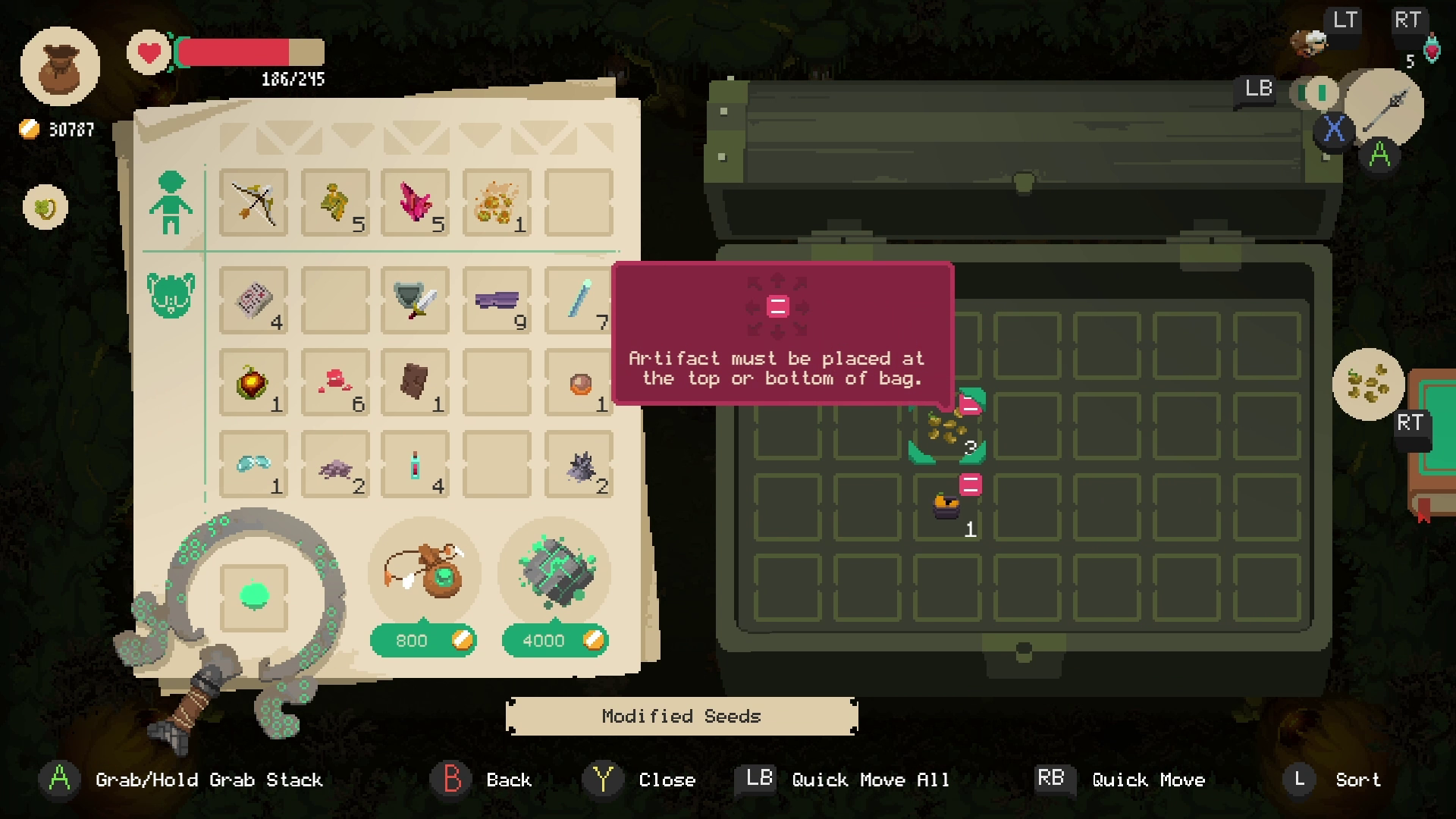
The game nudges you to manage your greed through a clever inventory system. Many items are cursed - some might delete a neighboring item, others require specific placement. This turns loot management into a spatial puzzle. You're constantly weighing the risk: is this cursed relic worth the potential loss of other stock? You can always void items through the Merchant Mirror for a fraction of their value, but every time you do, you're watching potential profit vanish just to save some space.
More than the sum of its parts?
Here's the honest question: does having two games in one make Moonlighter better or worse?
The case for genius:
The shop gives dungeon runs a meaning that pure roguelikes struggle to create. Will's motivation isn't abstract survival - it's economic. That mundane, relatable goal makes each run feel grounded in a way that dungeon crawling alone rarely achieves.
The case for distraction:
Neither half is as good as it would be if the whole game were about it. The shop lacks the depth of a dedicated management game. The dungeon lacks the mechanical complexity of a dedicated action roguelike.
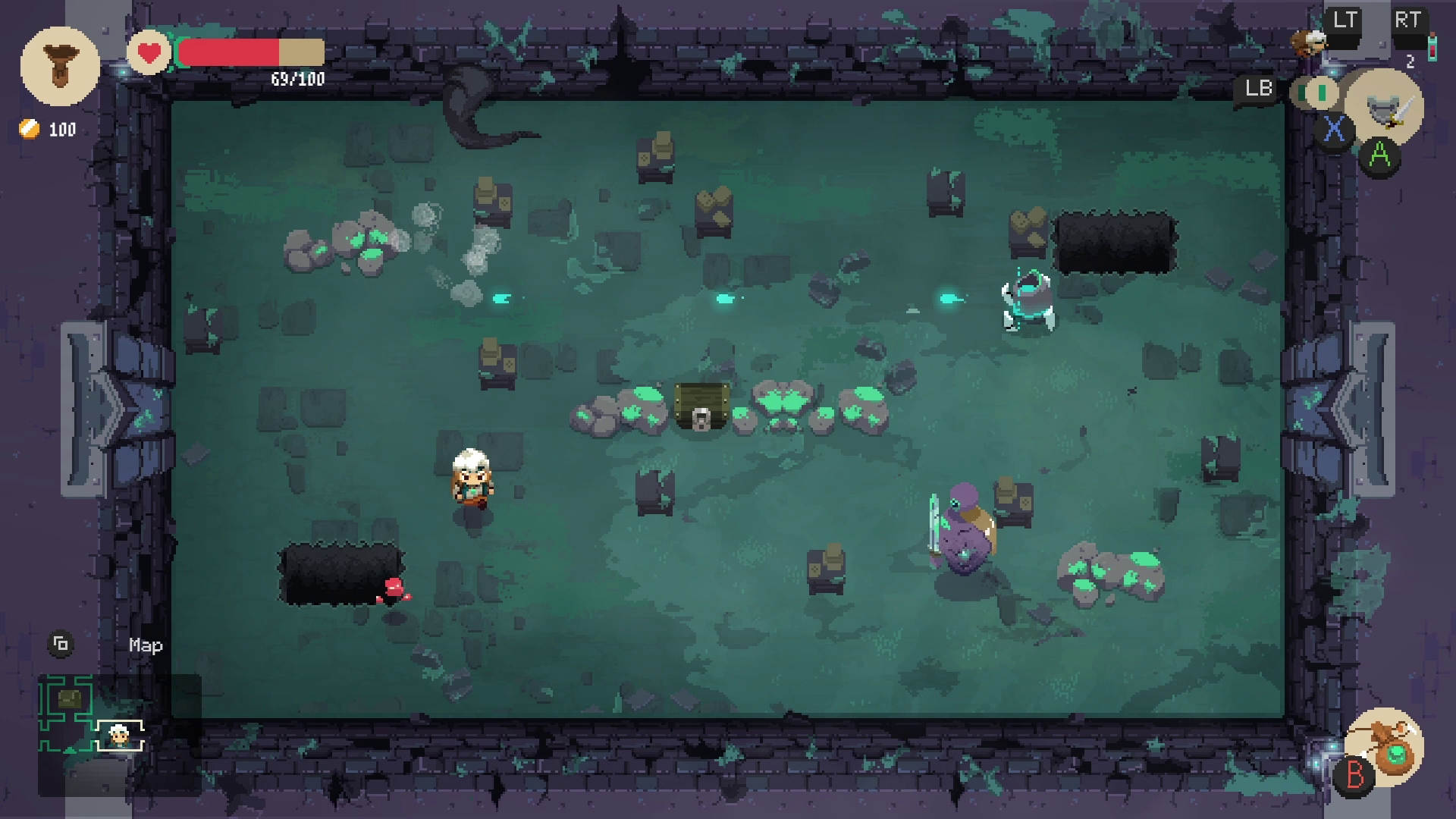
Moonlighter is, in a very specific sense, a game designed around the seam between two genres rather than the center of either one. It's most interesting precisely where shop meets dungeon - in the economic decisions, the curse system, the deliberate choice of when to leave. Those moments of intersection are where the design is original. The pure shop sections and the pure dungeon sections are competent but unremarkable.
The soundtrack ties everything together. It's diverse enough to give each dungeon its own distinct personality, yet shifts naturally between the cozy warmth of the town and the tension of the runs. It never feels like you're playing two separate games - the music makes sure the vibe stays consistent, even when the stakes change.
A roguelike for everyone?
The dungeon difficulty is forgiving by genre standards. Death is inconvenient but not devastating. Runs are short enough that a failed attempt costs minutes, not hours. The shop gives you something to do between runs that doesn't feel like waiting - you're always progressing, always building toward something, even when the dungeons are fighting back.
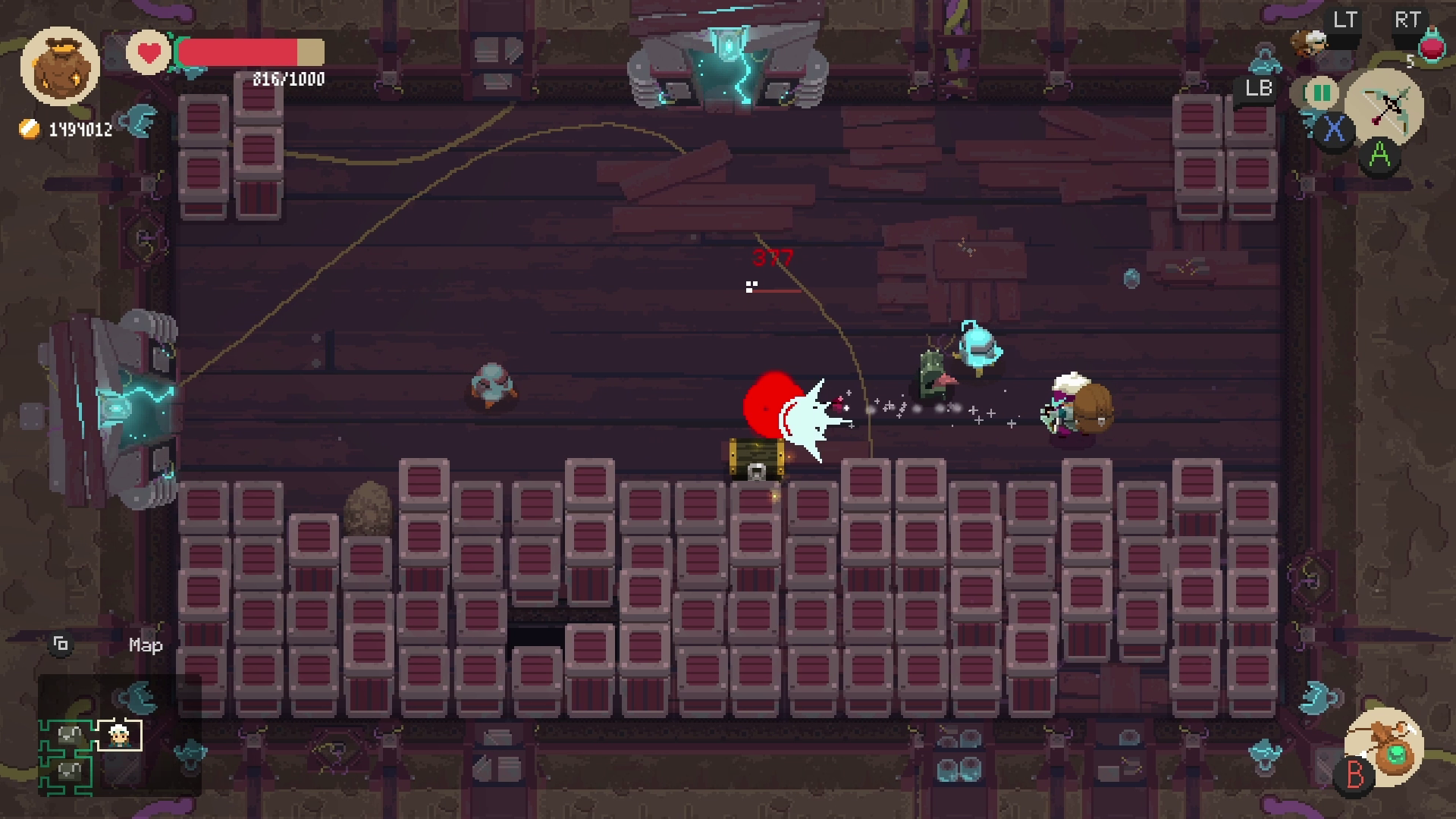
For a player who's curious about roguelikes but intimidated by the genre's reputation for difficulty, Moonlighter is a remarkably accessible entry point. The cozy aesthetic - warm pixel art, a friendly town that grows visibly as you invest in it, soft music - keeps the tone gentle even when the dungeons are asking you to try again.
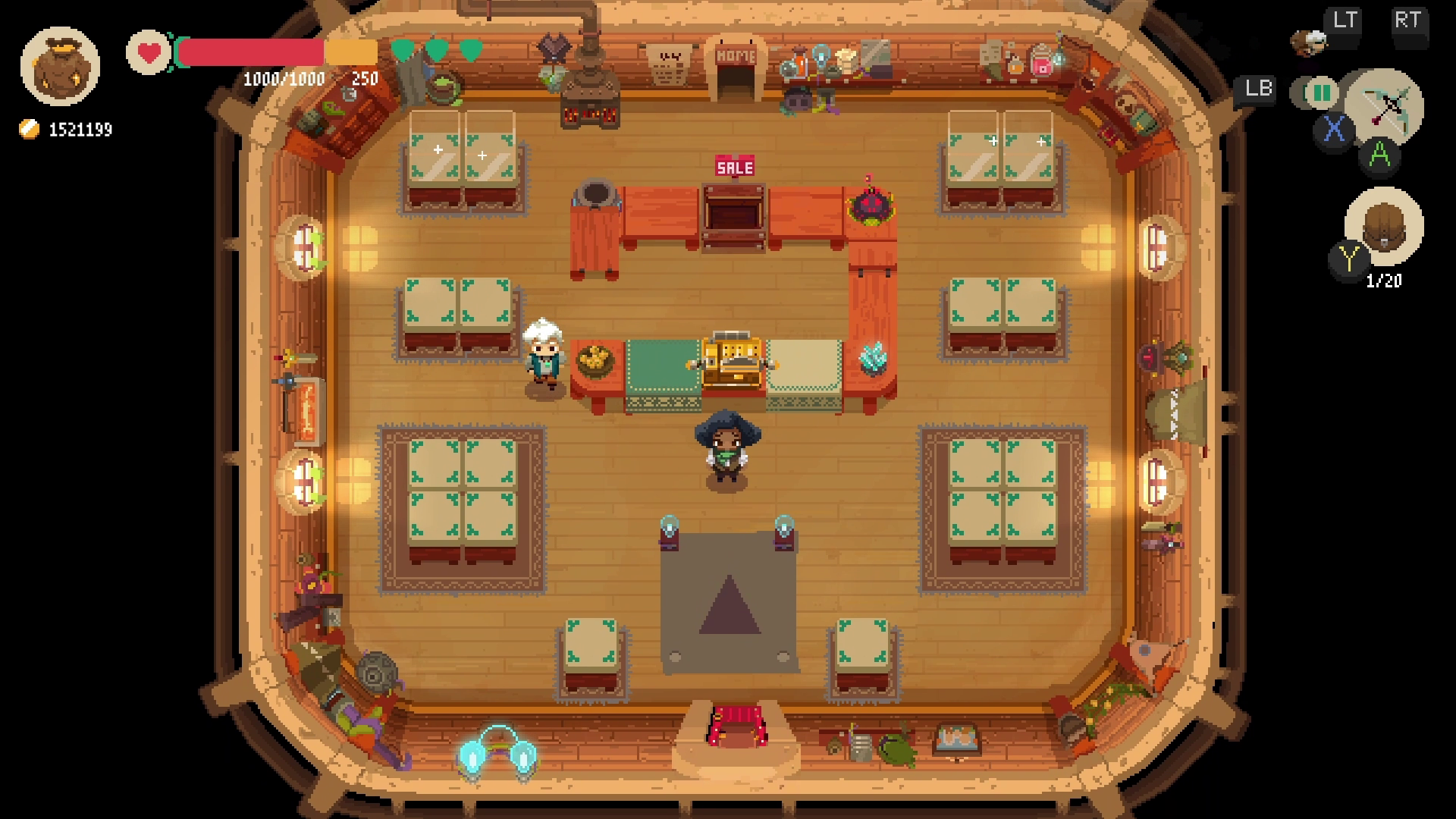
For experienced roguelike players, the attraction is different. The shop isn't something genre veterans usually get - the change of pace, the quieter rhythm of a shop day after a dungeon night, can be genuinely refreshing. A palette cleanser built into the same game.
Retail therapy in the abyss
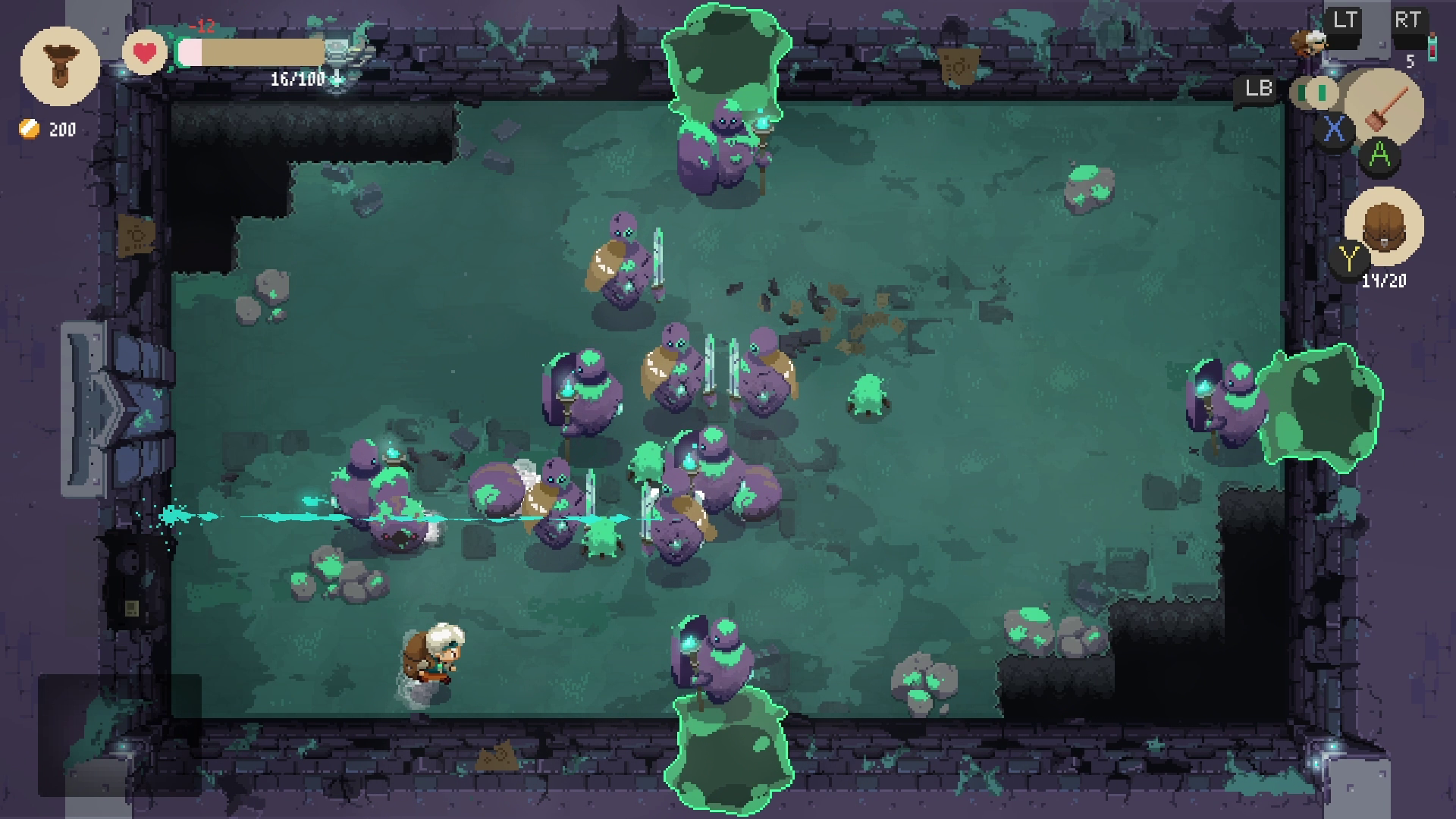
Moonlighter challenges a long-standing genre trope: what if the hub world wasn't just a pitstop between runs? Instead of a static upgrade menu, the game offers a second life. It proves that the mundane rhythm of running a shop can be just as rewarding as the adrenaline of a boss fight - turning what is usually "downtime" into the heart of the experience.
Is the execution perfect? Not quite. The shop could be deeper, and the dungeons could be more complex. But even if the answer Moonlighter provides is imperfect, the question it asks is vital. It's a game built with enough charm and design intelligence that the journey - seams and all - is still something worth experiencing for yourself.