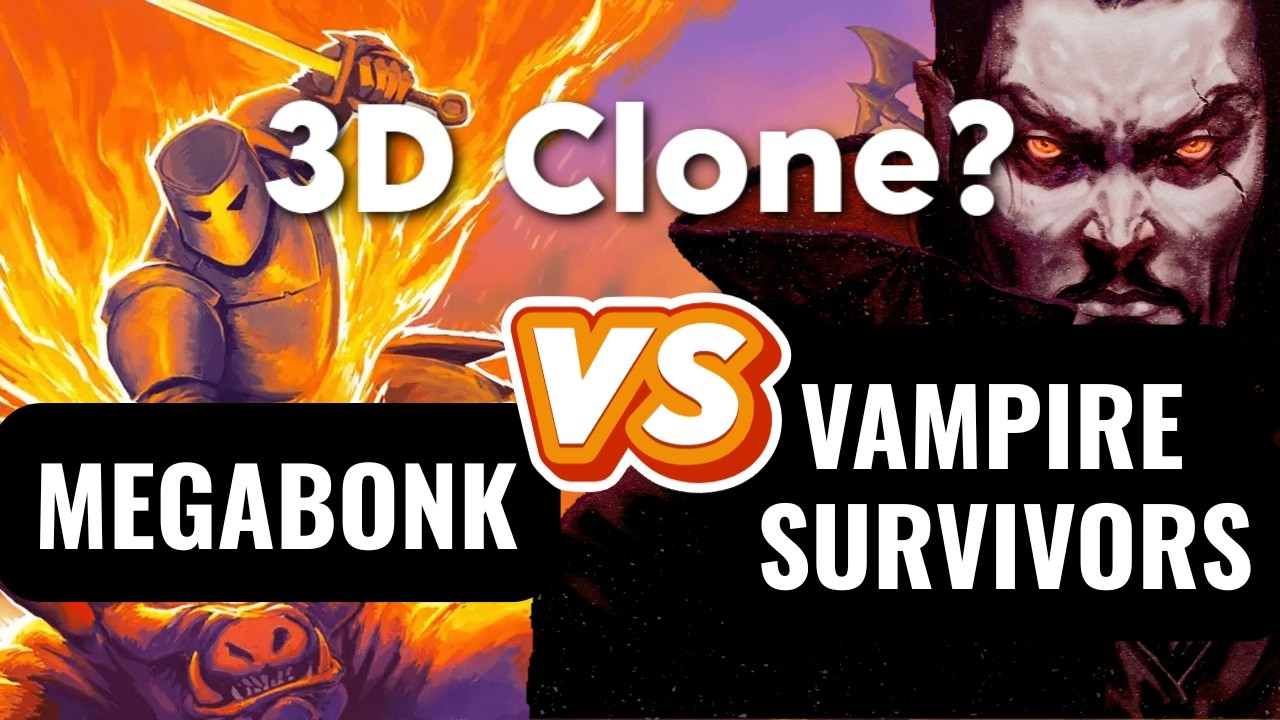
The game is called Megabonk. It was made by one person, sold a million copies in two weeks, and the developer himself describes it as "Vampire Survivors but 3D." So the question kind of writes itself: is that all it is? A clone with a dimension added? A coat of 3D paint on a formula someone else invented?
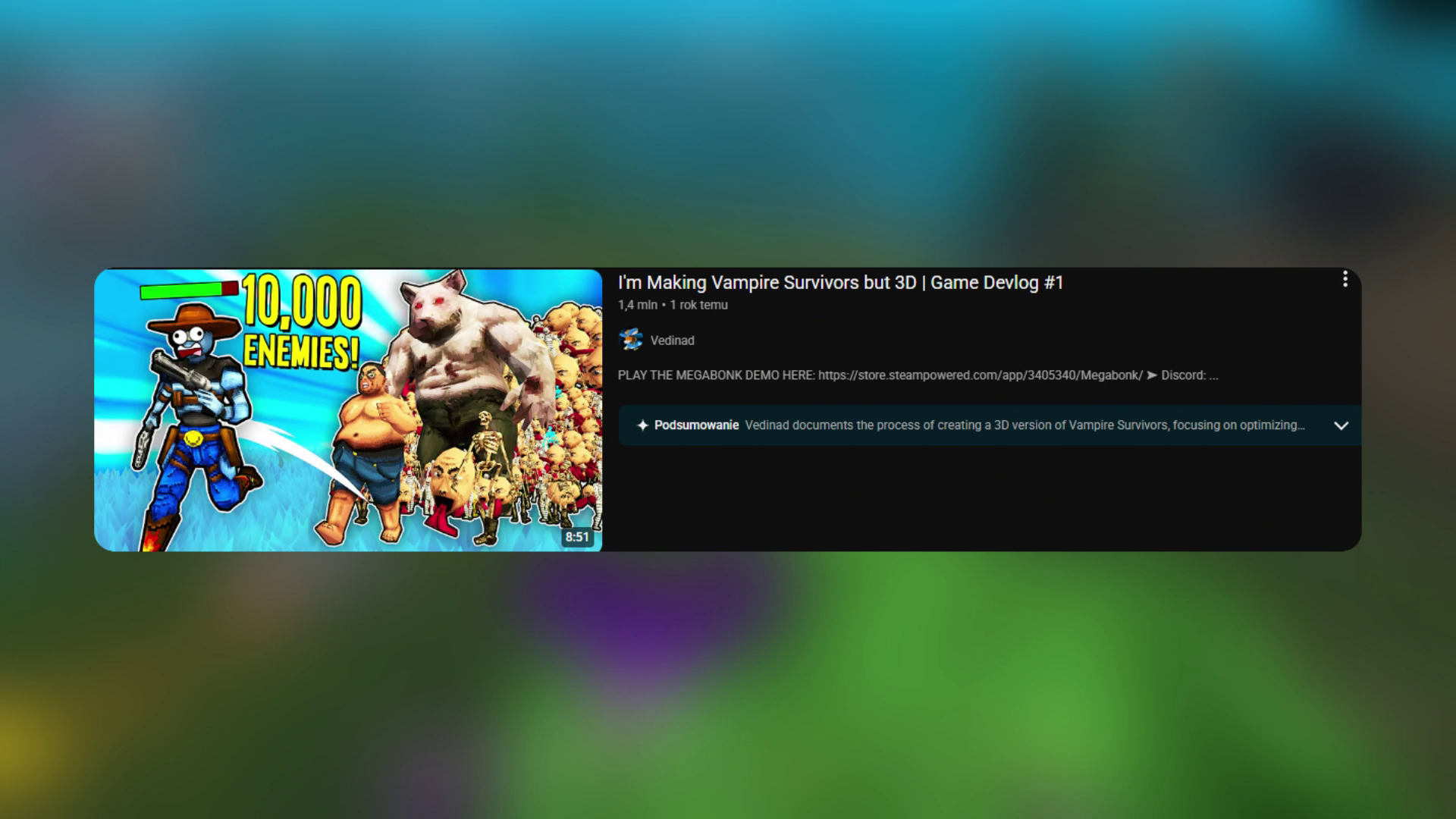
It's a fair question - because Vampire Survivors spawned an enormous wave of imitators. The survivor-like is probably the most copied template in indie games right now. Some of those clones are cynical cash-grabs. Some are genuinely good games that just happen to share a formula. Telling them apart matters.
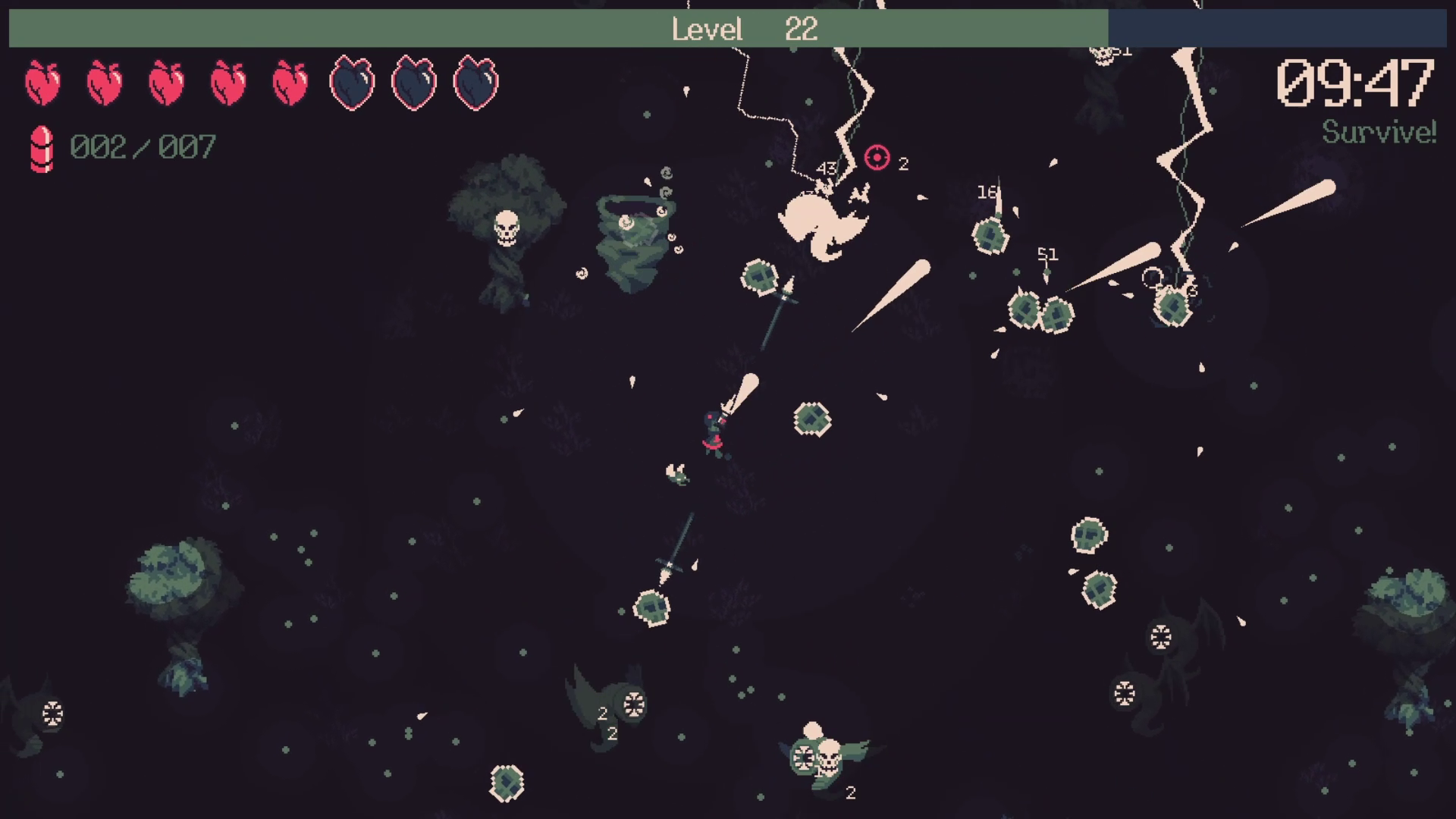
I've spent a lot of time with Megabonk trying to answer that honestly - because "clone" is a word that gets thrown around carelessly, and how we answer it determines whether this game deserves the attention it's getting, or whether it's just riding a wave someone else built.
So let's break it down.
What it copies - and copies well
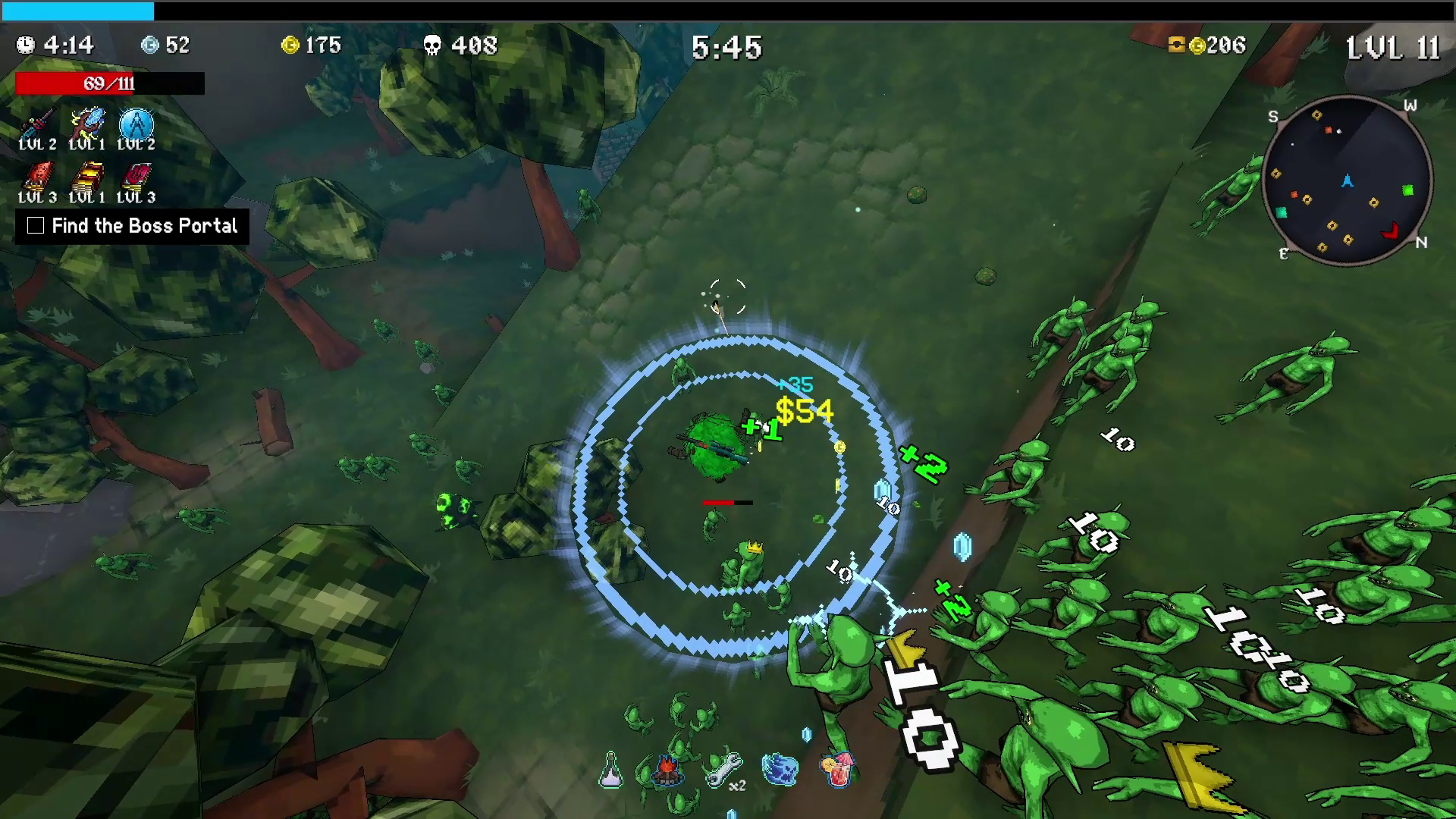
Let's be direct. Megabonk takes the core loop wholesale from Vampire Survivors: you move through a map, enemies spawn in escalating waves, your weapons fire automatically, you level up and choose upgrades. The upgrade selection screen, the experience gems dropped by enemies, the way difficulty ramps over a fixed time window - all of it is structurally lifted from the template Vampire Survivors established.
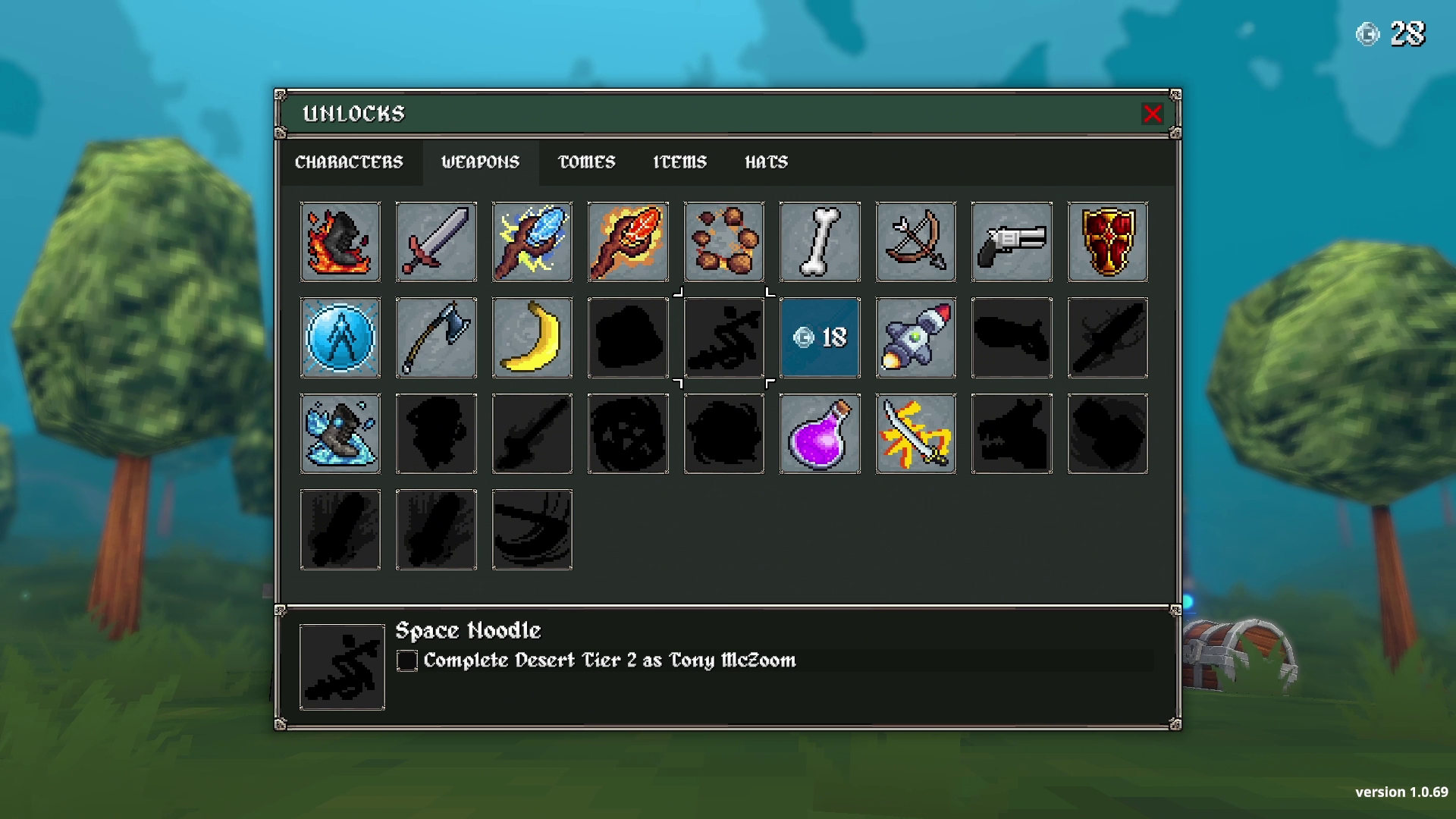
Even the meta-progression works almost the same way: spend currency earned in runs to unlock new characters and weapons for the pool. If you've played Vampire Survivors and you boot up Megabonk, the first ten minutes will feel deeply familiar. Intentionally so. This isn't a game trying to hide its influences.
In terms of structure, template, and loop - yes, Megabonk is a Vampire Survivors clone. That's just true. The question is whether that's the whole story.
What the 3D actually changes
Moving the formula into three dimensions isn't a cosmetic decision - it's a mechanical one, and it changes more than you'd expect.
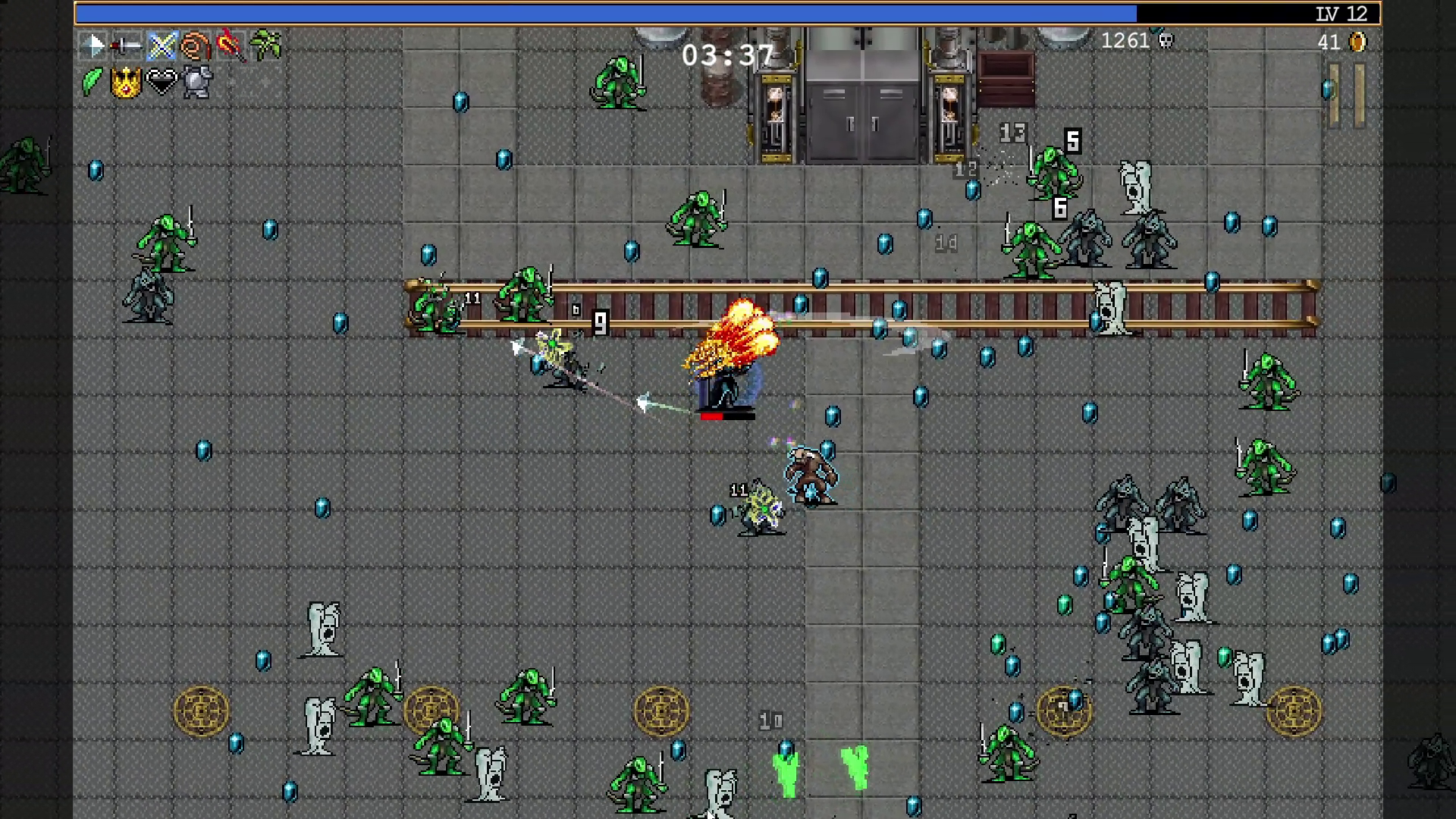
In Vampire Survivors, the map is flat. Threat assessment is almost entirely about distance and direction. Movement is a survival tool, but the terrain itself is largely irrelevant. Megabonk has verticality: ramps, platforms, elevation changes. You can be on high ground, shooting down at enemies who can't reach you - for a while. You can fall off a ledge into a mob you didn't see coming. You can funnel enemies into kill zones that flat maps simply don't allow.
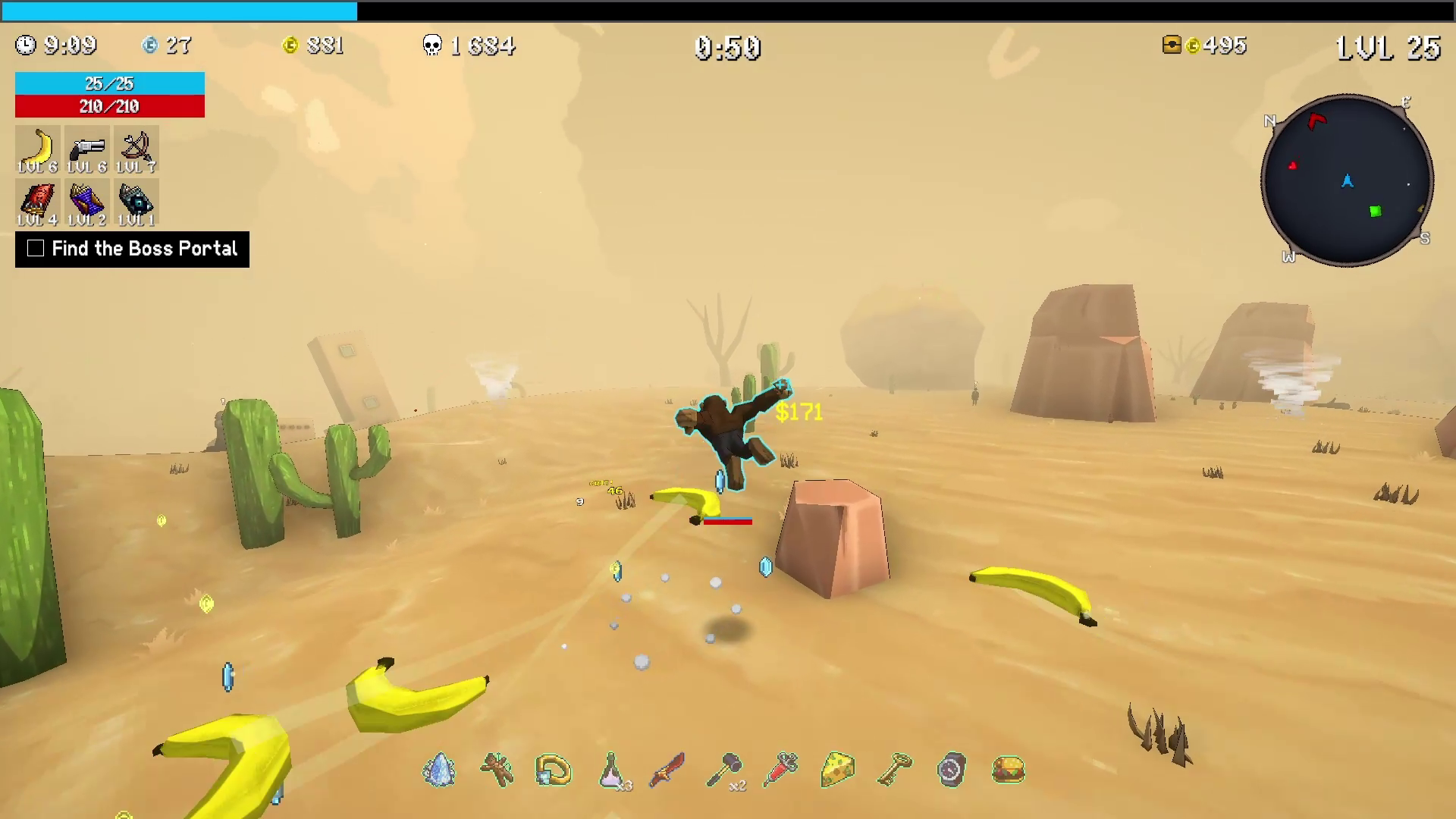
More importantly, movement has a different feel. You're not drifting around a flat plane - you're jumping, sliding, careening down ramps. One of the most immediately striking characters is a skeleton on a skateboard, and that's not just a visual gag: the momentum-based movement of that character genuinely changes how you interact with the terrain. You're not just avoiding enemies. You're navigating a space.
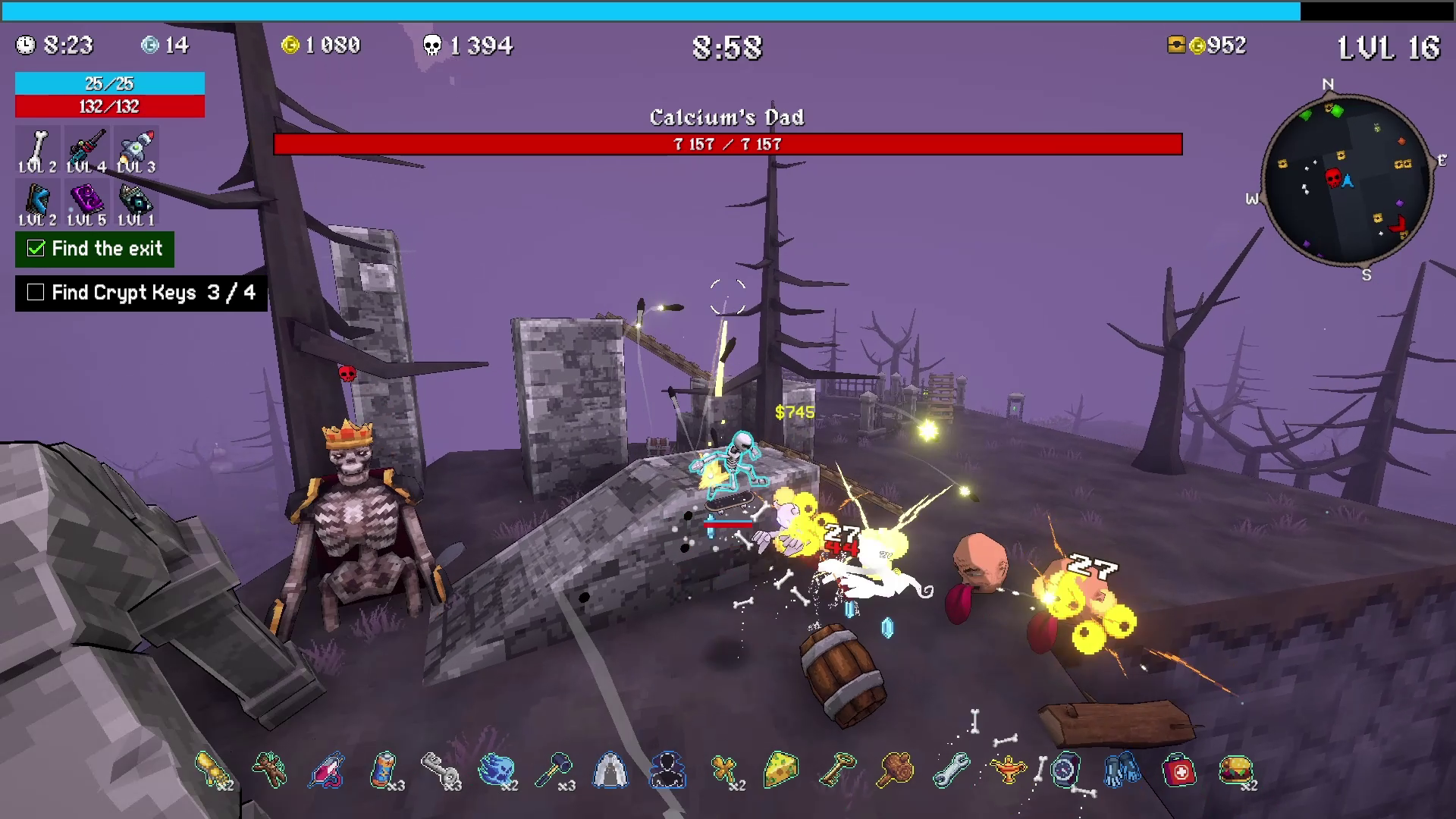
That navigation layer is something genuinely new - not revolutionary, but not nothing either.
Where Risk of Rain sneaks in
The 3D space does something beyond adding verticality - it turns Megabonk into a game you actively explore, and that's where it pivots away from Vampire Survivors and starts leaning into the Risk of Rain 2 playbook.
Chests are scattered across the map, opened with gold, containing powerful items that can dramatically alter your build mid-run. Pots with gold or experience, shrines with stat boosts, collectibles worth the detour - the map constantly gives you reasons to push forward instead of just running from enemies. The world is as active as you are.
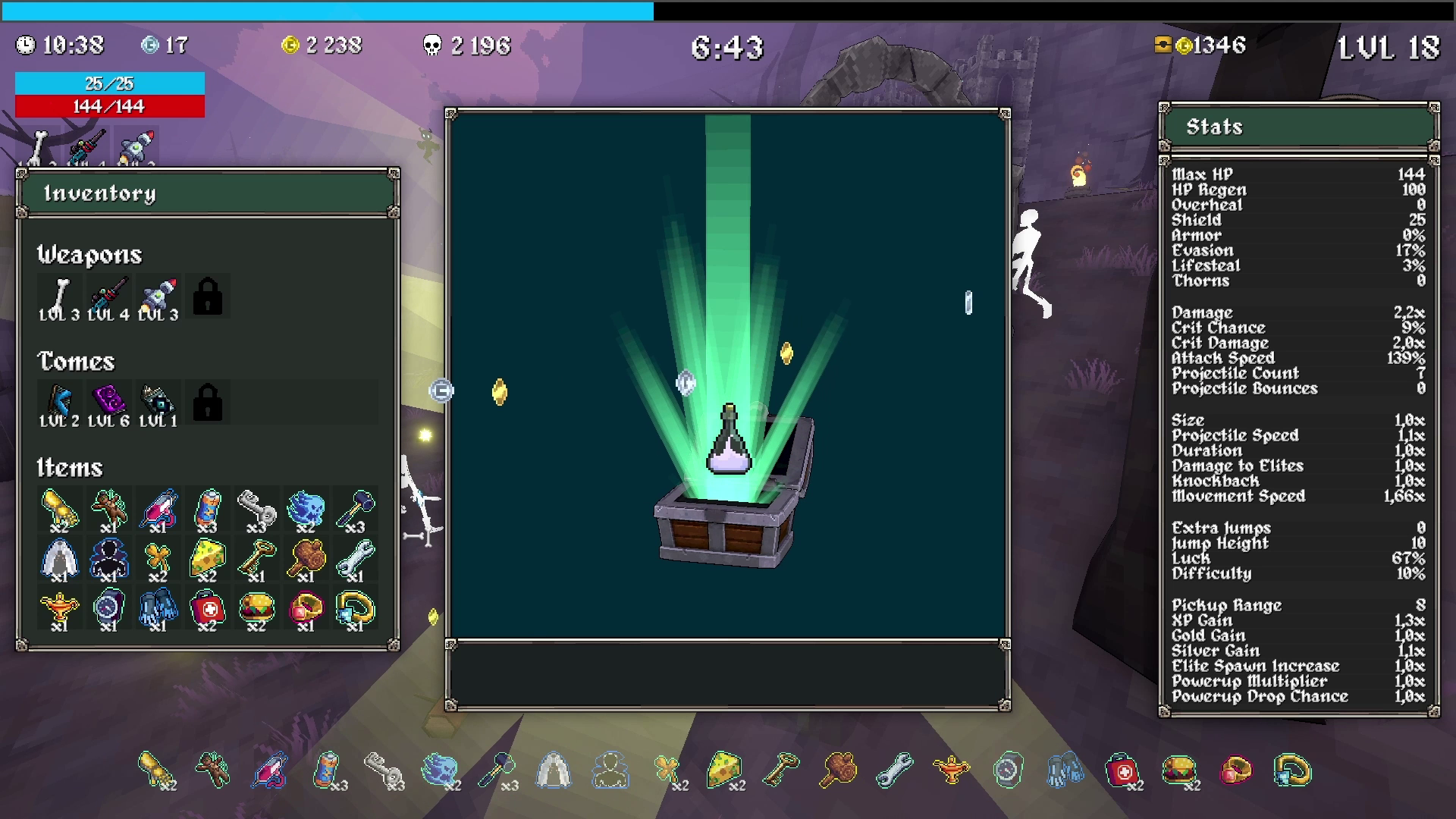
To be fair, the chest-opening animation is almost identical to Vampire Survivors - same casino lights, same fanfare. What changed is how you interact with the world around those chests. In Vampire Survivors, items come to you. In Megabonk, you go to them - navigating terrain, jumping platforms, deciding whether that chest on the upper ledge is worth the climb.
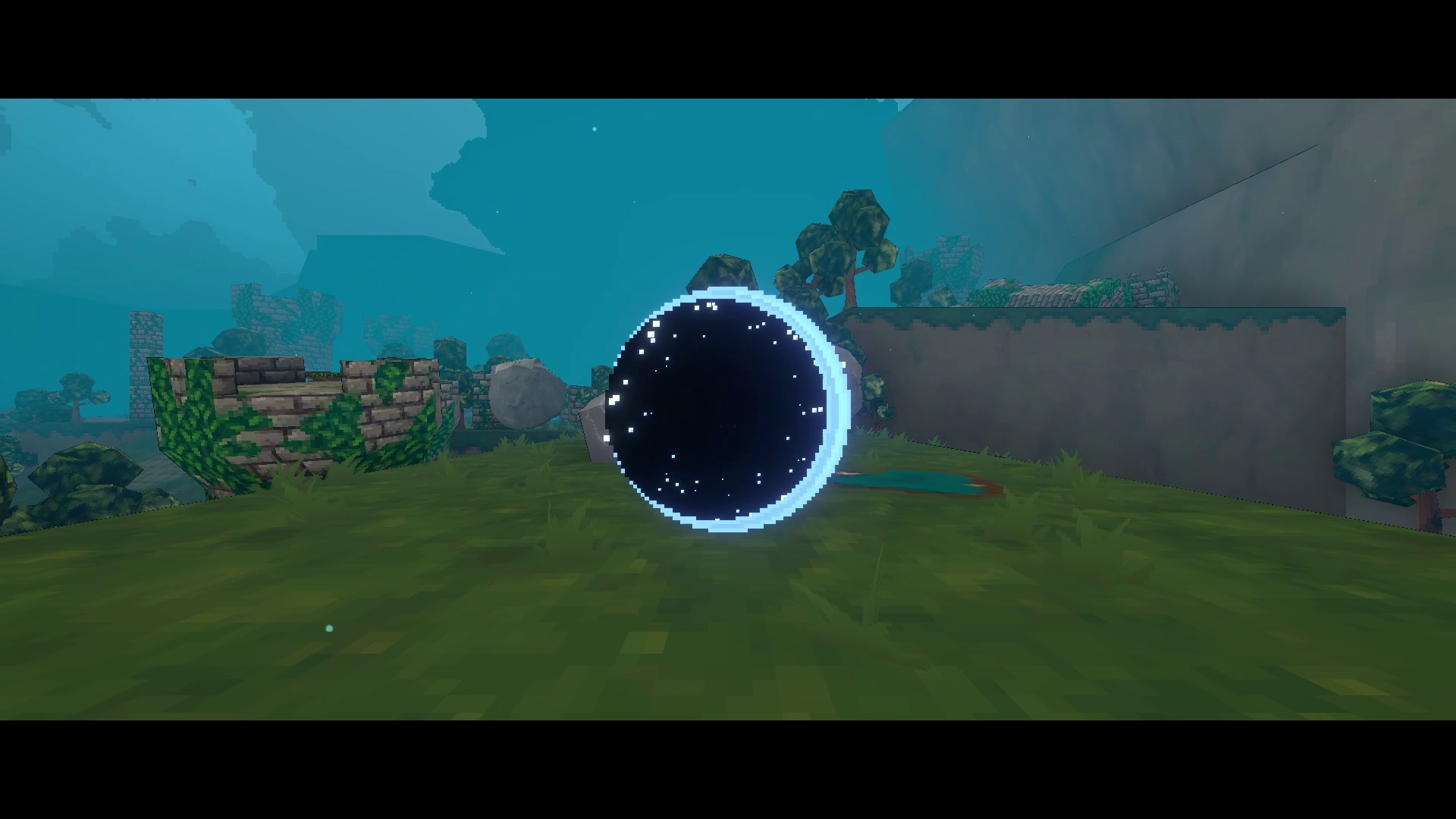
There's also a direct structural influence from Risk of Rain 2: each stage's main objective is finding a portal on the map and triggering a boss fight. You're not just outlasting a clock - you're hunting something. That active goal, combined with the chest system, makes Megabonk's moment-to-moment experience fundamentally more mobile than its flat-plane inspirations.
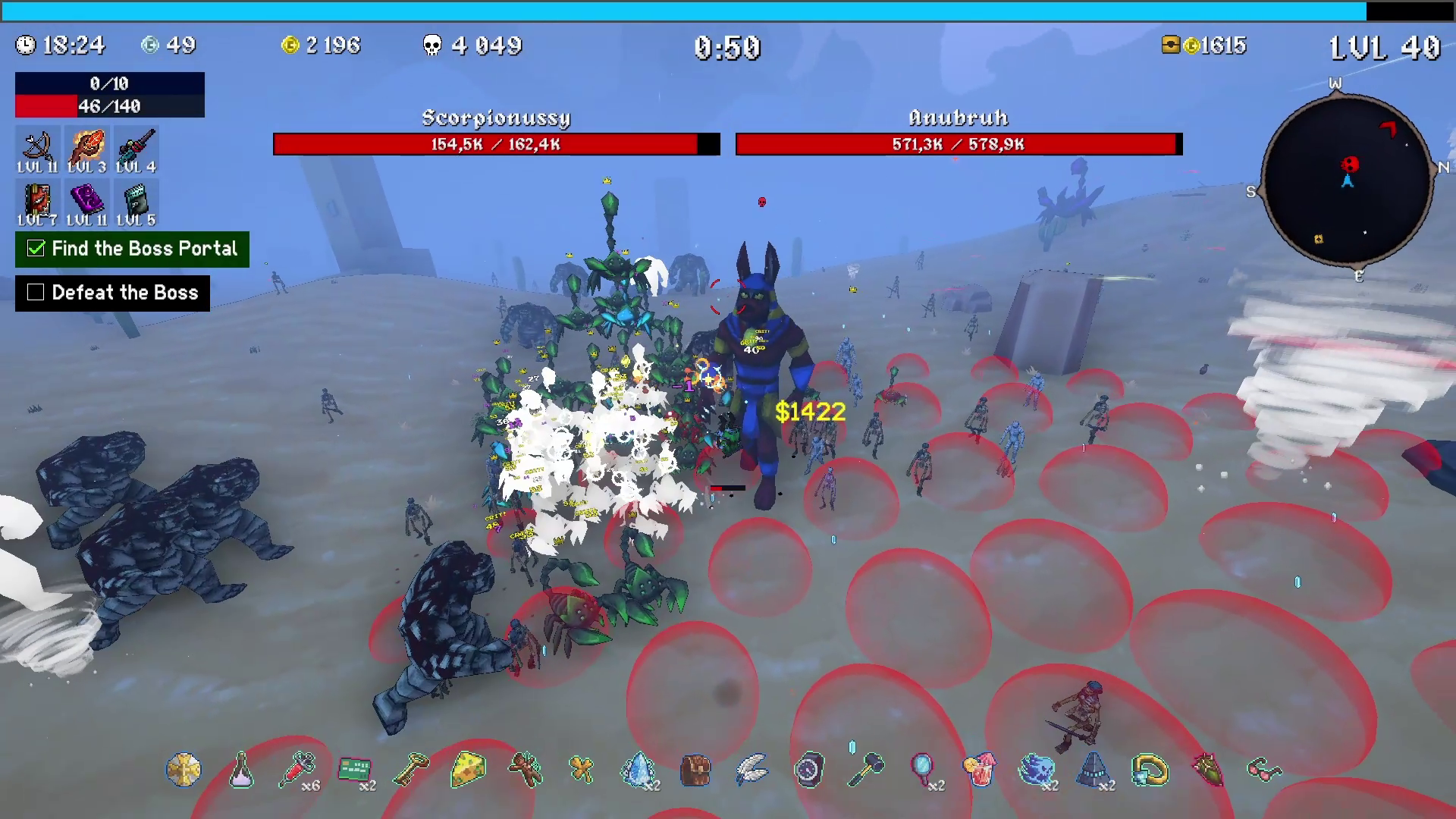
The legendary items that drop from those chests can redefine a run entirely. That variance is a design choice - divisive but intentional. It makes individual runs memorable. It also means luck plays a larger role than some players would prefer. Whether that's a feature or a flaw depends on what you want from the genre.
The memes are real, and so is the game underneath them
Megabonk leans hard into absurdist humor. The enemy roster mixes fantasy and pure nonsense - skeletons, cactuses, flying heads, and, for some reason, Anubis as a boss. Playable characters include Megachad, whose weapon is literally just standing still and looking good (which, yes, damages nearby enemies - same effect as Vampire Survivors' garlic), and Monke, a monkey in sunglasses who looks like he walked out of a meme generator.
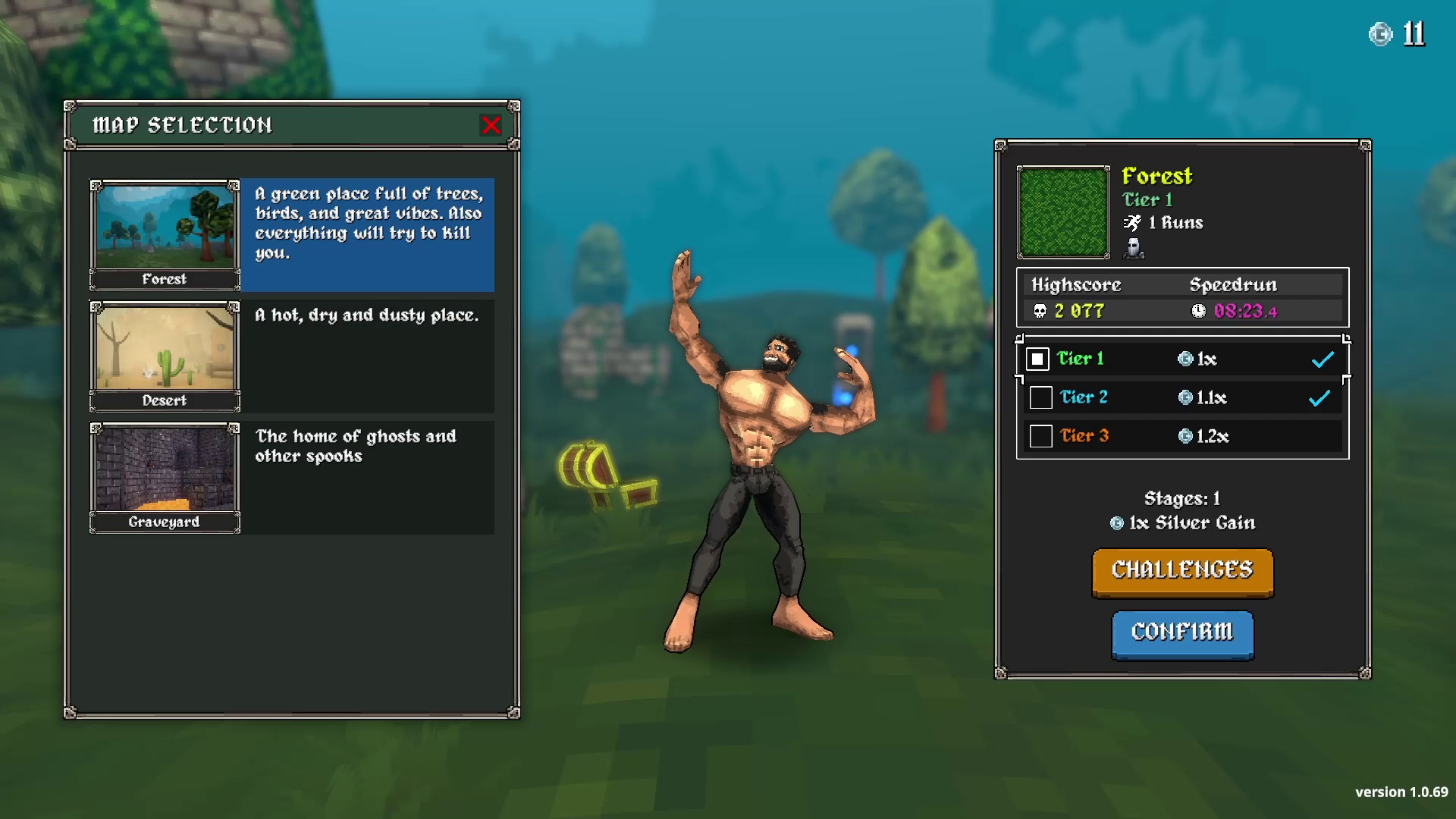
This is the most subjective part of the game and the one most likely to determine whether it clicks for you. If you're on the same wavelength as the humor, it sustains itself across hours of play because the game keeps finding new ways to be ridiculous. If you're not, it reads as noise sitting between you and the game underneath.
What I'd push back on is the idea that the humor substitutes for mechanical depth - because underneath the memes, there's a real game with real build decisions. A serious optimization community has formed around Megabonk: YouTube videos, spreadsheets, tier lists debating item synergies. That kind of community only forms around games with genuine mechanical depth, because you can't theorycraft a game that has nothing to theorycraft.
A few real downsides
Megabonk launched with two maps, which is thin for a genre where the map is the environment you'll spend dozens of hours inside. A third has since been added, but the novelty still wears off faster than the item system does. The randomization within maps provides some variety, but after enough runs, the terrain stops surprising you.
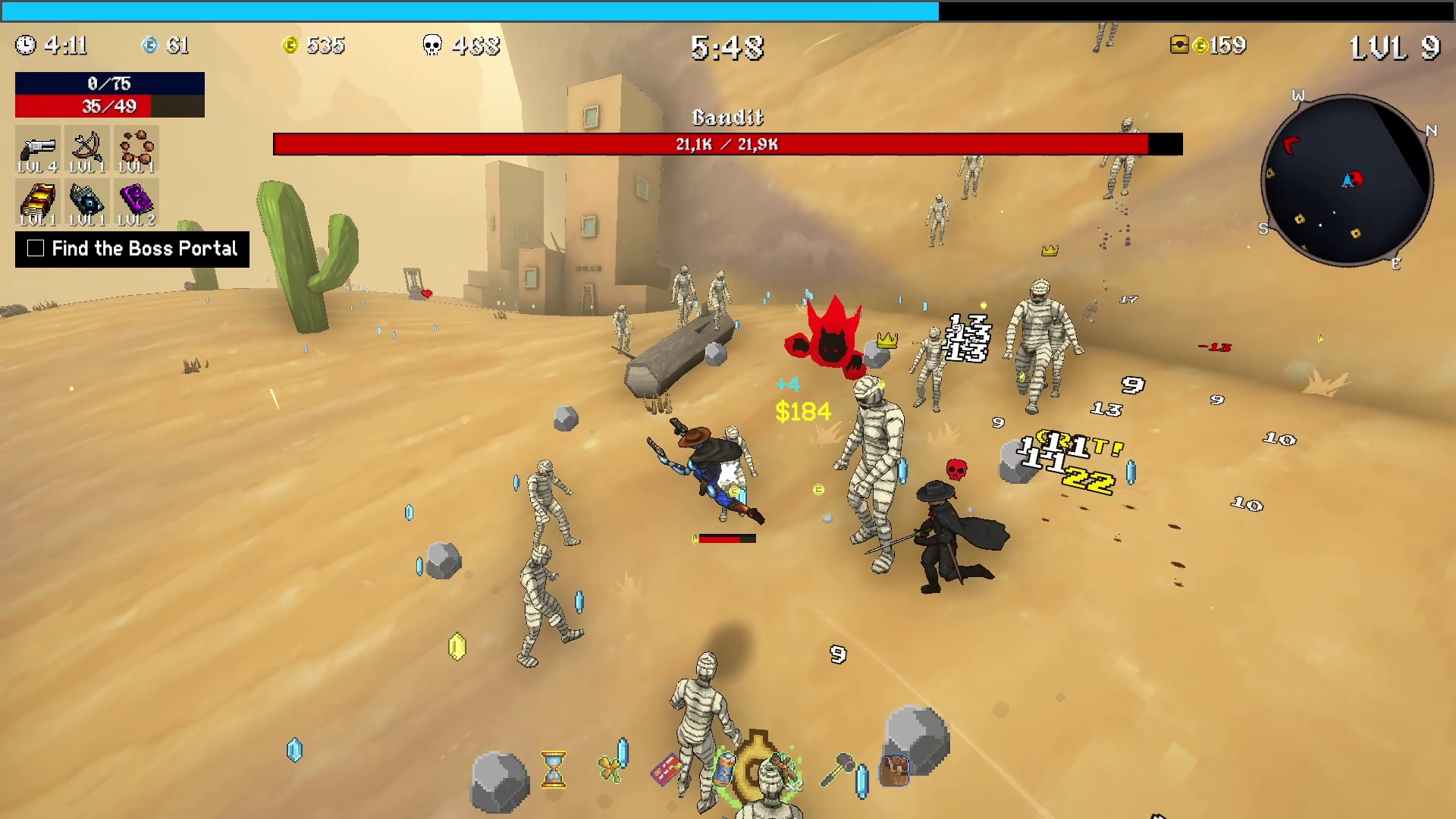
The second issue is difficulty consistency. The power spike when enemies scale in late waves can feel disproportionate depending on your build - in some runs you're unstoppable, in others the game shuts you down before it even feels fair. The same variance that makes the chest system exciting makes the difficulty curve less predictable than it should be. These aren't critical flaws, but they're genuine shortcomings in an otherwise confident package.
Clone or not? Final verdict
Megabonk is a clone in structure - and entirely its own thing in execution.
It takes the Vampire Survivors template without apology, adds a third dimension that meaningfully changes the feel of play, layers in chest-based item discovery that reshapes the pacing of runs, and wraps all of it in an aesthetic that is aggressively, deliberately its own.
If originality means inventing a new genre, no - Megabonk didn't do that. If originality means taking an existing format and doing something genuinely distinct with it, then yes. The 3D terrain, the movement, the chest system, and the sheer commitment to its own chaotic identity add up to something that doesn't feel like a pale imitation.
The developer calls it "Vampire Survivors but 3D" because that's the fastest way to explain it to someone who hasn't played. Megabonk sold a million copies in two weeks because it's genuinely fun - not because people were fooled into thinking it was something else.
When a run clicks - when two or three items combine into something you didn't plan and you're laughing at how broken it is - Megabonk delivers a specific kind of joy that's hard to manufacture and impossible to fake.